
Quick answer: For everyday photos — daylight scenes, portraits, travel, social media — a modern flagship phone genuinely rivals a DSLR, thanks to computational photography, multiple built-in lenses, and the fact that it’s always in your pocket. But a DSLR or mirrorless camera still wins decisively for low light, long-range zoom, fast action, and full manual control. The “better” camera is the one that fits what you actually shoot.
Not long ago, suggesting a phone could compete with a “real” camera would get you laughed out of the room. That’s no longer true. Today’s flagship smartphones produce images good enough for magazine covers and gallery walls, and for a huge number of people they’ve quietly replaced the dedicated camera altogether. Here’s an honest look at why phone cameras have caught up — and the situations where a DSLR or mirrorless camera still pulls ahead.
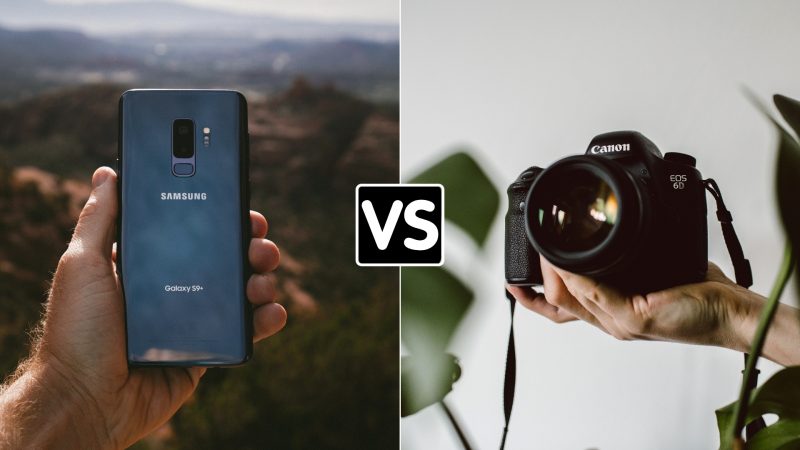
Table of Content
Why Phone Cameras Have Caught Up So Fast
The secret isn’t the tiny lens or sensor — physically, a phone can’t match a big camera. The secret is computational photography: software that captures several frames in an instant and merges them into one optimized image. Modern night modes, HDR, and portrait blur are all software doing work that used to require expensive glass and careful technique. Add powerful AI processing and the result is a camera that makes excellent images with zero effort from you.
5 Reasons a Phone Camera Can Rival (or Beat) a DSLR
1. The image-quality gap has shrunk to almost nothing in good light
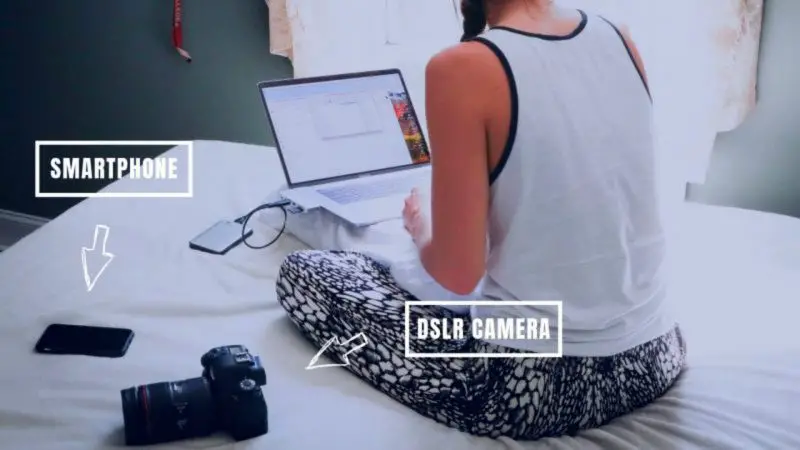
In bright, even light, the difference between a flagship phone photo and a DSLR photo is genuinely hard to spot — especially once both are viewed on a screen, which is where the vast majority of photos now live. Computational processing closes the gap so well that for daylight travel, food, and family shots, most people simply can’t tell which camera took which image.
2. A flagship phone can cost less than a camera plus lenses
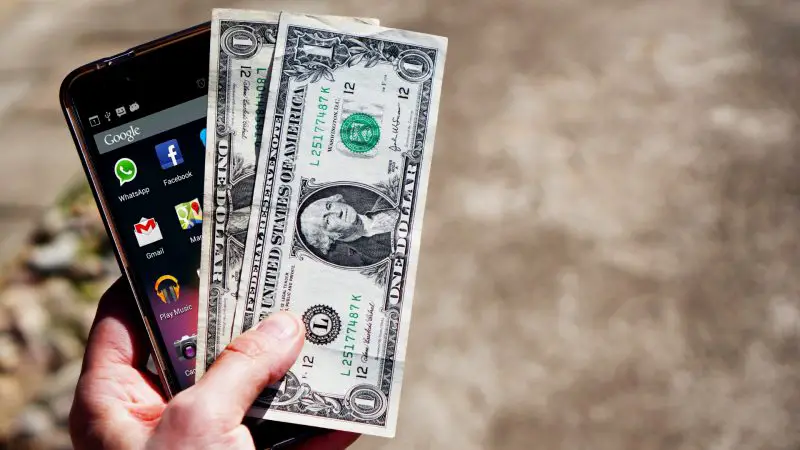
You probably need a phone anyway. A good camera is an additional purchase — and the body is only the start. A DSLR or mirrorless system quickly adds up once you buy a couple of decent lenses, memory cards, and a bag. When the phone in your pocket already shoots beautifully, that’s a lot of money saved.
3. Phones carry several cameras in your pocket
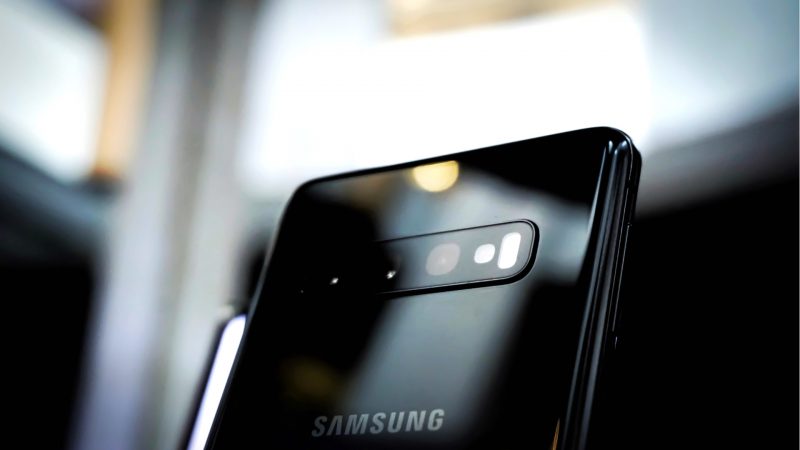
Modern flagships pack a cluster of cameras — typically an ultra-wide, a main wide, and a telephoto — so you can switch from a sweeping landscape to a tight portrait without changing a single lens. With a DSLR, getting that range means carrying (and swapping) multiple heavy lenses. The phone gives you a versatile kit that weighs nothing and is always ready.
4. The camera app does the hard part for you
Point, shoot, and the phone handles exposure, focus, HDR, and noise instantly. You can edit and share in seconds without ever touching a computer. A DSLR rewards you for learning the exposure triangle and transferring files — worth it for enthusiasts, but a real barrier if you just want a great photo right now.
5. It’s always with you — and needs almost no upkeep
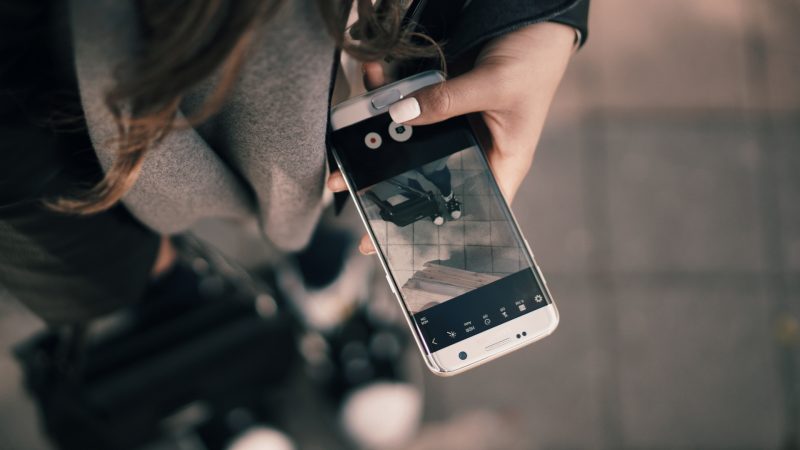
The best camera is the one you have on you, and you always have your phone. There are no lenses to clean, no separate battery to charge, no sensor to worry about, and nothing extra to carry. The photo you actually take beats the perfect shot you missed because the DSLR was at home.
Where a DSLR or Mirrorless Camera Still Wins
Phones are remarkable, but physics still matters. A dedicated camera has a far larger sensor and real optics, and that lead shows up clearly in demanding situations:
| Where it matters | Why the camera wins |
|---|---|
| Low light | A bigger sensor gathers far more light, so dim scenes stay clean while phones get noisy |
| Zoom | True optical zoom lenses reach much farther than a phone’s short telephoto or “digital” zoom |
| Background blur | Real depth of field from a large sensor beats software portrait mode, which still bungles hair and edges |
| Fast action | Faster autofocus and burst rates nail sports, wildlife, and kids in motion |
| Control & RAW | Full manual control and deep RAW files give pros far more editing latitude |
| Big prints | More resolution and dynamic range hold up when you print large or crop hard |
So, Should You Use a Phone or a DSLR?
It comes down to what you shoot:
Stick with your phone if you mostly shoot in good light, share online, value convenience, and don’t want to carry gear or learn settings. For most people, today’s best phones are more than enough — see our pick of the best camera phones.
Get a dedicated camera if you shoot a lot in low light, want serious zoom, photograph fast action or wildlife, plan to print big, or want to grow as a photographer with full control. A good entry-level camera paired with learning to use it properly opens doors a phone can’t.
For a lot of photographers, the honest answer is both: a phone for everyday moments and a camera for the shots that demand more. The phone hasn’t killed the camera — it’s freed the camera to do what it does best.
Frequently Asked Questions
Are phone cameras as good as DSLRs now?
For everyday photos in good light — especially ones viewed on a screen — flagship phone cameras are genuinely comparable to DSLRs, thanks to computational photography. DSLRs and mirrorless cameras still produce clearly better results in low light, at long zoom ranges, for fast action, and when you need large prints or heavy editing latitude.
Why do phone photos sometimes look better than DSLR photos?
Because phones apply automatic computational processing — HDR, noise reduction, and scene optimization — that makes images look punchy and clean straight out of the camera. A DSLR captures a more neutral file that often needs editing to reach its full potential, so an unedited DSLR shot can look flatter than a phone’s polished JPEG.
Can a phone replace a DSLR for professional work?
For some professional uses — social content, real estate walkthroughs, and quick editorial shots — yes, phones are already used professionally. But for weddings, sports, wildlife, studio work, and large commercial prints, the larger sensor, optical zoom, autofocus speed, and RAW control of a dedicated camera remain essential.
What does a DSLR do that a phone can’t?
A DSLR or mirrorless camera offers a much larger sensor for cleaner low-light images, interchangeable lenses with true optical zoom, naturally shallow depth of field, faster autofocus for action, full manual control, and richer RAW files for editing. These come from physics and optics that a pocket-sized phone simply can’t match.