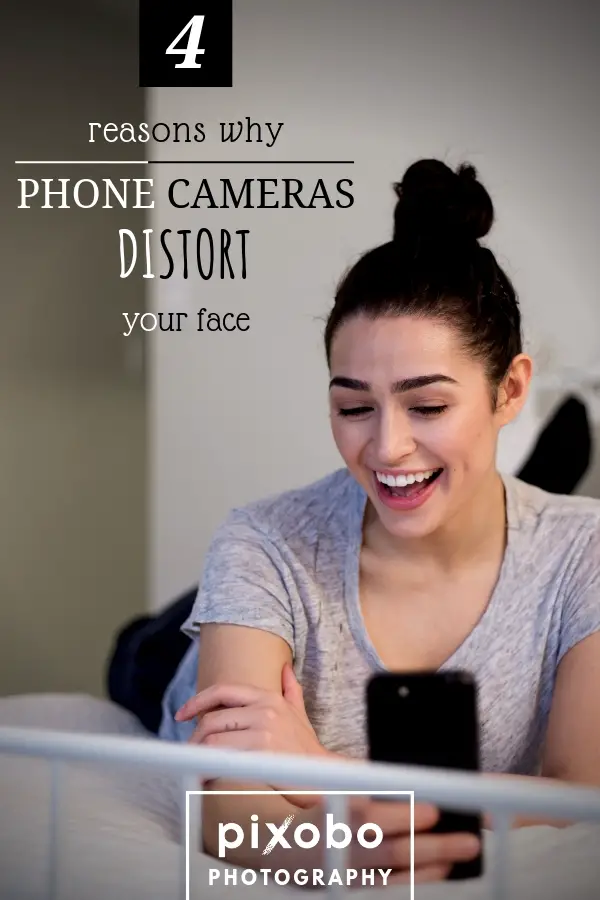
Yes — phone cameras really do distort your face, especially in selfies. Because your arm can only hold the phone a foot or so away, the parts of your face closest to the lens (usually your nose and forehead) look larger than they are in real life. A Rutgers and Stanford study published in JAMA Facial Plastic Surgery found that a selfie taken about 12 inches away makes the base of your nose look roughly 30% wider than a photo taken from 5 feet, the standard portrait distance. Add in a phone’s wide-angle lens, the flip between your mirror image and a real photo, and the fact that a still frame can’t show how you move, and it’s no wonder the camera rarely matches the face you expect.
You know the feeling: you check the mirror before heading out and like what you see, then someone snaps a photo and a stranger seems to be staring back. Why do you look better in the mirror than in pictures? Below we break down every reason — the technical, the optical, and the psychological — so you can stop taking those “bad” photos so personally.
Related: How to Take Good Photos With a Phone
Table of Content
The Technical Reasons Your Face Looks Different in Photos
1. You Are Too Close to the Lens

This is the single biggest culprit, and it shows up most when you take a selfie. Human arms simply aren’t long enough, so your face ends up too close to the camera — and whatever is closest to the lens looks bigger than it really is. Usually that means your nose or forehead.
The numbers back this up. The JAMA Facial Plastic Surgery study found that at the typical 12-inch selfie distance, the base of the nose appears about 30% wider and the tip about 7% wider than at a normal 5-foot portrait distance. The fix is simple: put the camera at least about 1.5 meters (5 feet) away and zoom or crop in, rather than pushing the lens up to your face.
2. The Type of Lens Matters

The lens itself plays a big role. Most front-facing phone cameras use a wide-angle lens, which exaggerates whatever is near the center and can make your face look wider and rounder. Many phones include a 2x or telephoto mode or a secondary rear lens that’s far more flattering for portraits — using it instead of the selfie cam is one of the easiest upgrades you can make.
Related: 5 Reasons Some Phone Cameras Beat a DSLR
3. A Photo Flattens a 3D World Into 2D

In real life, you judge a person’s size and proportions using everything around them and the depth cues from your two eyes. A single photo throws most of that away. With fewer reference points and no depth, the same hand can look huge in one shot and tiny in another — and your perception of size gets skewed. Your face is subject to exactly the same flattening.
4. Your Eyes Adjust to Light — Cameras Don’t (As Well)

Your eyes constantly adapt to changing light, smoothing out harsh sun and dim rooms automatically. A camera’s auto mode tries to do the same, but the result rarely matches what you saw — and harsh or unflattering light changes how your features read. Even shooting in manual, it’s hard to perfectly recreate real life, which is why good lighting matters as much as your proportions. If you want full control, our guide to ideal camera settings walks through it.
The Truth About Mirrors

Here’s the part most people overlook: a mirror shows you a reversed image, but a photo shows you the way everyone else sees you. Draw a dot on your left cheek and it appears on the right in the mirror. You’ve spent your whole life studying that flipped reflection, so the un-reversed version in a photo looks subtly “off.”
It feels strange because faces aren’t symmetrical — your left side genuinely differs from your right. If your face were perfectly symmetrical, the flip wouldn’t bother you at all. The cure is exposure: take more photos of yourself and let others photograph you until the un-mirrored version starts to feel normal.
Related: 3 Reasons You Look Better in the Mirror Than in Pictures
The Psychological Side: We Read Faces in Motion
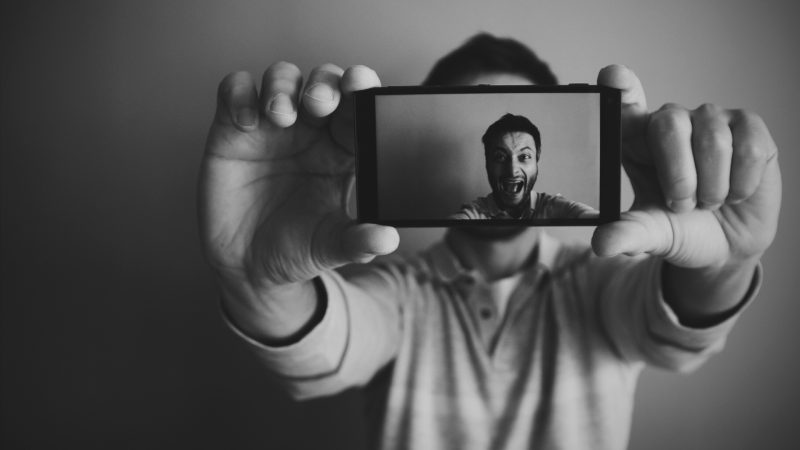
A photo can’t show movement, and that matters more than you’d think. Pause a film on a random frame and even a famous actor can look odd — press play and the beauty snaps back. We perceive people in motion, with their expressions and gestures, so a frozen frame can feel unfamiliar even when it’s perfectly flattering. This is also why some very good-looking people aren’t especially photogenic.
And when you face a mirror, you instinctively strike your favorite pose and angle — the one you’ve practiced for years. A candid photo catches you without that rehearsed setup, which is exactly why it feels less like “you.”
Related: Is Being Photogenic a Gift or a Skill?
The Bottom Line
So, do phone cameras distort your face? Yes — through lens distance, wide-angle optics, the flattening of 3D into 2D, and the mirror-image flip you’re used to. On top of that, we all build an idealized picture of ourselves in our heads and feel let down when a photo doesn’t match it.
The good news: most of this is fixable. Step the camera back, use a better lens or the rear camera, find your light, and take enough photos to get comfortable with your un-mirrored face. And remember — a single image can tell a story, but it can never capture your voice, your movement, or the way people actually experience you. Don’t take a “bad” photo too much to heart.
Related: 10 Tips to Take a Good Selfie If You’re Not Photogenic
Frequently Asked Questions
Do phone cameras really distort your face?
Yes. The main cause is distance: holding a phone about 12 inches away makes the parts of your face nearest the lens — usually your nose — look larger. A JAMA study found the nose base can appear about 30% wider than at a normal 5-foot portrait distance. Wide-angle phone lenses add to the effect.
How far should the camera be to avoid face distortion?
Aim for roughly 1.5 meters (about 5 feet) and zoom or crop in, rather than holding the phone close to your face. At that distance facial proportions look natural, which is why professional portraits are shot from several feet away with a longer lens.
Why do I look better in the mirror than in photos?
A mirror shows a reversed image you’ve seen your whole life, so it feels “right.” A photo shows the un-flipped version everyone else sees, which looks unfamiliar because faces aren’t symmetrical. A camera also freezes a single moment and can’t capture how you move.
Which is more accurate, the mirror or the camera?
Neither is perfectly accurate. The mirror reverses your face, and a close-up camera distorts proportions. A photo taken from about 5 feet with a normal or slight telephoto lens, in good light, is the closest representation of how others actually see you.