The short answer: choose glossy photo paper when you want bright, punchy color and maximum sharpness for small prints kept in albums or behind a frame without glass. Choose matte when you want a glare-free, fingerprint-resistant finish that looks great in glass frames, in bright rooms, and for black-and-white or large wall prints. If you want a middle ground, ask your lab for luster (also called satin or pearl) — it gives glossy-like color with far less glare, which is why most pro print labs use it as their default.
Printing photos is far from dead — people still fill albums, hang gallery walls, and frame wedding and family portraits. But the moment you upload a print order, you hit the same fork in the road: glossy vs. matte. Below is a quick comparison table, then a plain-English breakdown of what each finish does, when to use it, and which one professionals actually reach for.
| Factor | Glossy | Matte |
|---|---|---|
| Color & vibrancy | Brighter, punchier, higher contrast | Softer, more muted, lower contrast |
| Sharpness | Appears sharper, more detail “pop” | Slightly softer-looking |
| Glare / reflections | High — reflects light at many angles | Low — diffuses light, viewable from any angle |
| Fingerprints & scratches | Shows them easily | Resists them; handles well |
| Best for | Small color prints, albums, vivid landscapes | B&W, portraits, large wall art, glass frames |
| Behind glass | Can stick to the glass | Sits cleanly; easy to reframe |
| Ink use / cost | Absorbs less ink (cheaper per print) | Absorbs more ink (pricier in bulk) |
Table of Content
What Does a Glossy Photo Finish Mean?
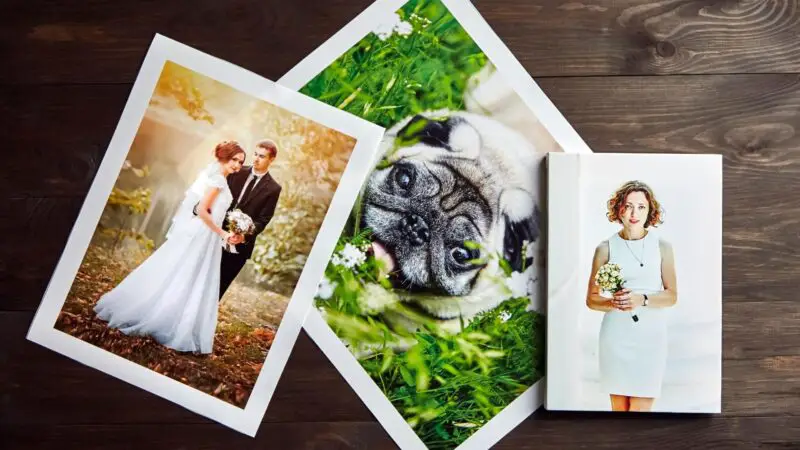
As the name implies, a glossy photo finish is shiny. The paper has an added coating that reflects as much light as possible, which makes colors look sharper and more vibrant and adds definition to the edges of the image.
There are two common levels of gloss: high gloss (the shiniest) and semi-gloss (somewhere between full gloss and no gloss). If you want photos that look polished and pop off the page, glossy is a strong choice.
When Should You Use a Glossy Finish?
Glossy paper produces brighter, more saturated color, so it shines on high-color images rather than black-and-white ones. Think small prints from Christmas and birthday parties, weddings, and family gatherings that will live in a photo album. It is also a favorite for vivid landscapes and travel shots where you want the color to do the talking.
Pros and Cons of a Glossy Finish
- Pro: The shiny surface emphasizes fine detail and makes color pop.
- Pro: Great for small prints kept in albums for years.
- Pro: Absorbs less ink, so it is usually cheaper per print.
- Pro: Can be framed cheaply without glass.
- Con: Not ideal for black-and-white or low-color photos.
- Con: Reflections make it hard to view at certain angles, and it is a poor choice for large prints.
- Con: Shows fingerprints and scratches easily.
- Con: Glossy prints can stick to glass, so reframing risks damaging them.
What Does a Matte Photo Finish Mean?

A matte photo finish is not shiny and feels muted. Matte paper has no reflective coating and a slightly textured surface, so light is diffused rather than reflected. That means almost no glare, and you can view the print comfortably from any angle.
Compared with glossy, matte gives a simpler, more understated look — which is exactly why it adds a classic, gallery-like quality to black-and-white and sepia-toned photos.
When Should You Use a Matte Finish?
Matte is not obsolete — far from it. Because there is little to no reflection, it is ideal for studio portraits, gallery prints, and anything displayed behind glass or in a brightly lit room. It is also the safer pick for large wall prints, where glossy glare becomes a real problem.
Pros and Cons of a Matte Finish
- Pro: Sits cleanly in glass frames and can be reframed without damage.
- Pro: Resists fingerprints and scratches, so it handles well.
- Pro: No glare — viewable from every angle and in bright light.
- Pro: Ideal for large prints and for that classic film look.
- Con: Colors are less vibrant and the image looks slightly softer.
- Con: Matte prints are more prone to bending.
- Con: Uses more ink, so it can be pricier in large quantities.
What About Luster, Satin, and Pearl Finishes?
If glossy and matte feel like an either/or trap, there is a middle path. Luster (sometimes labeled satin or pearl) sits between the two: it keeps much of the rich color and contrast of glossy while cutting most of the glare and fingerprint problems. This is why many professional print labs make luster their default finish — it is forgiving across portraits, events, and prints that may end up behind glass. If you are unsure which to order, luster is the safest all-rounder.
Glossy vs. Matte: Which Do Professional Photographers Use?
Most professionals lean toward matte or luster over high-gloss for finished, framed, or displayed work. Glossy can look more impressive at first glance because the color is so bright, but glare is the enemy of any print on a wall or behind glass — and matte and luster avoid it. For loose prints and albums, plenty of pros still choose glossy for the extra punch. In short, the “professional” choice depends on how the photo will be displayed, not on one finish being universally better. If you want to nail the shot before it ever reaches the printer, our guide to the ideal camera settings for studio photography is a good place to start.
Glossy vs. Matte: Which Is Better for Wedding Photos?
For wedding prints, the choice comes down to how you will keep them. Use glossy for small, colorful prints you will laminate or frame without glass and want to look vivid. Use a semi-gloss or luster if you want rich color with fewer glares. Use matte for prints going into glass frames, for a timeless album look, or for photos people will handle often. Many couples order their album in matte or luster and a few standout shots in glossy — there is no rule that says you must pick just one.
Glossy vs. Matte: Which Has Better Image Quality?
On color images, glossy appears to have higher image quality because colors are more enhanced and the print looks premium. But matte produces a stunning, classic result on black-and-white photos. Both finishes deliver high-quality prints when matched to the right photo — the “better” finish is the one that suits the image and where it will be displayed.
Glossy vs. Matte: Which Lasts Longer?
Both glossy and matte prints can last for decades when handled and stored well. Their lifespan depends more on care than on the finish itself: keep prints out of direct sunlight, frame them behind UV-protective glass where possible, and avoid touching the surface. Glossy prints are more vulnerable to surface fingerprints and scratches, while matte prints are more prone to bending — so store both flat and protected. For more on protecting your images, see our tips on how to protect your photos.
Frequently Asked Questions
Is glossy or matte better for printing photos?
Neither is universally better. Glossy is better for small, vivid color prints kept in albums; matte is better for black-and-white photos, large wall prints, and anything behind glass or in bright light. If you want one all-purpose finish, choose luster (satin).
Do professional photographers use glossy or matte?
Most professionals prefer matte or luster for framed and displayed work because they avoid glare. Glossy is still used for loose prints and albums where extra color pop is wanted.
Which finish is best for black-and-white photos?
Matte is best for black-and-white and sepia images. Its non-reflective surface gives them a classic, gallery-style look that glossy’s high contrast can overpower.
Does glossy or matte show fingerprints more?
Glossy shows fingerprints, smudges, and scratches far more than matte. If your prints will be handled often or displayed without glass, matte (or luster) is the more forgiving choice.
What is luster (satin) finish?
Luster — also called satin or pearl — is a finish between glossy and matte. It keeps most of glossy’s rich color while reducing glare and fingerprints, which makes it the popular default at many professional print labs.
There will always be a glossy vs. matte debate, and the honest answer is that the best finish depends on your photo and where it will live. When in doubt, order a small test print of the same image in both finishes (or in luster) and compare them in the room where they will hang. For more printing know-how, see our guide to standard photo print sizes.