
Last updated: June 2026.
Short answer: The best professional mirrorless camera in 2026 is the Nikon Z9 (or its smaller, cheaper sibling the Z8) for all-round pro work, the Canon EOS R5 for hybrid photo/video, and the Sony A1 II if money is no object. Below are the pro and prosumer bodies worth buying — and the current flagships to know.
Table of Content
The professional mirrorless landscape in 2026
Mirrorless has fully taken over professional photography. At the very top, the current flagships are the Sony A1 II and global-shutter A9 III, Canon EOS R5 Mark II and R1, and Nikon Z9 and Z8 — any of which will handle the most demanding sports, wildlife, and commercial work. They’re extraordinary (and priced to match).
But here’s the working pro’s secret: the previous generation of these bodies — the original R5, the Z7 II, the A7 IV — still delivers world-class results for a fraction of the latest flagship’s price. The list below focuses on the cameras that give professionals the most capability per dollar right now.
What makes a camera “professional”?
- A full-frame (or medium-format) sensor for the best image quality and low-light performance — the exception being pro APS-C speed bodies like the X-H2S.
- Fast, reliable subject-tracking autofocus that locks onto eyes, animals, and vehicles.
- Weather-sealed, durable build and dual card slots — non-negotiable for paid work.
- High burst speeds and deep buffers for action, plus serious video specs for hybrid shooters.
Building a kit? Pair these with our guides to mid-range mirrorless and the best lenses for Sony.
The 8 best professional mirrorless cameras in 2026
| Camera | Best for | Sensor | Standout |
|---|---|---|---|
| Nikon Z9 | Overall pro flagship | 45.7MP FF | 20fps RAW, 8K, no mechanical shutter |
| Canon EOS R5 | Hybrid photo/video | 45MP FF | 8K video, superb AF |
| Sony a7 IV | Best value full-frame | 33MP FF | Do-everything all-rounder |
| Fujifilm X-H2S | APS-C speed | 26MP APS-C | 40fps, pro build |
| Nikon Z7 II | High-resolution value | 45.7MP FF | Detail for landscape/studio |
| Panasonic S1H | Video / cinema | 24MP FF | Cine-grade 6K |
| Panasonic GH6 | Micro Four Thirds video | 25MP MFT | Compact video powerhouse |
| Fujifilm GFX 50S II | Medium format value | 51MP MF | Larger-than-full-frame quality |
1. Nikon Z9 — best professional mirrorless overall
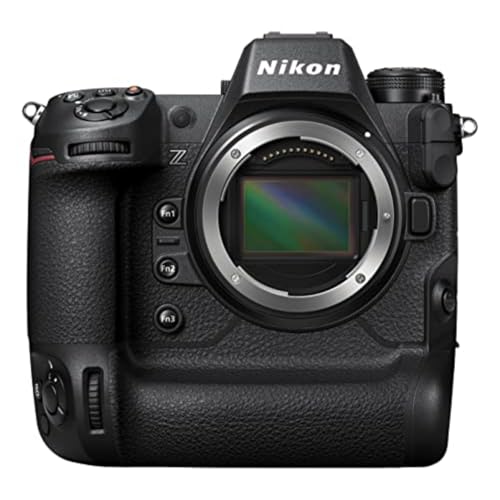
- 45.7MP Stacked CMOS sensor and EXPEED 7 image processing. Fast powerful AF that can keep up with the fastest subjects and frame rates.
- Subject detection uses deep learning to automatically detect and track people, cats, dogs, birds, cars, motorcycles, bicycles, trains and planes in still and video with no menu changes.
- Capture 45.7MP stills at 20 or 30 fps; 120 fps stills at 11MP, all with full AF and AE, and no viewfinder blackout. 8K/30p video capture in-camera for over 2 hours recording time. 4K 120p slow motion video capture.
Nikon’s flagship is a sports-and-wildlife monster: a 45.7MP stacked sensor shooting 20fps RAW (for 1,000+ frames), 8K video for hours without overheating, and pro-grade tracking AF — all with no mechanical shutter to wear out. If you need one camera that does everything at the highest level, this is it. (The smaller, cheaper Z8 packs nearly identical performance.)
✓ Pros: Blistering speed with a deep buffer; superb 45.7MP files; 8K video; legendary durability and battery.
✗ Cons: Large, heavy integrated-grip body; flagship price.
2. Canon EOS R5 — best for hybrid photo and video
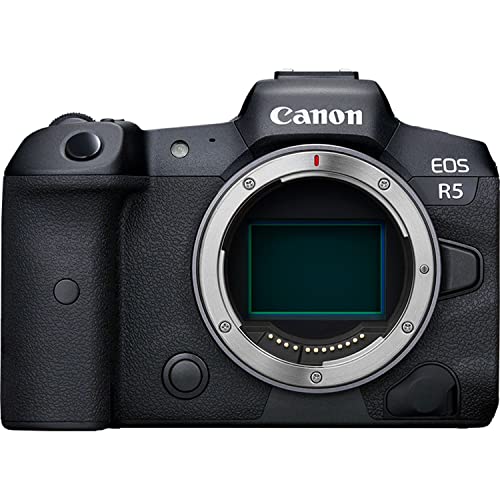
- High Image Quality: Canon EOS R5 8K digital camera features a stacked, back-side illuminated 45-megapixel full-frame CMOS sensor for phenomenal low-light performance, image clarity and level of detail
- Powerful Image Processor: DIGIC X image processor with an ISO range of 100-51200; expandable to 102400x; powers 8K capture, enhances detail, reduces noise and more with high speed and efficiency
- High-Speed Shooting: High-speed continuous shooting of up to 12 fps with mechanical shutter and up to 20 fps using electronic (silent) shutter — a large step-up in our EOS R-series line of mirrorless cameras
The R5 redefined the hybrid camera with a 45MP sensor, excellent Dual Pixel autofocus, in-body stabilization, and 8K video. It remains a phenomenal all-rounder for weddings, commercial, and editorial work, now at a strong price as the R5 Mark II takes the spotlight.
✓ Pros: Superb 45MP image quality; excellent AF and IBIS; 8K video; great ergonomics.
✗ Cons: Long 8K clips can overheat; R5 Mark II now exists.
3. Sony a7 IV — best value full-frame for professionals

- 33MP full-frame Exmor R back-illuminated CMOS sensor
- 8x more powerful, next generation BIONZ XR image processing engine
- Up to 4K 60p 10-bit 4:2:2 w/ full pixel readout in all recording formats
The a7 IV is the benchmark working camera: a 33MP sensor that balances resolution and speed, class-leading autofocus, and excellent hybrid video. For pros who want flagship-grade results without flagship cost, it’s the smart, do-everything choice.
✓ Pros: Excellent 33MP files; superb autofocus; great hybrid video; vast E-mount lens range.
✗ Cons: Rolling shutter in video; menus take learning.
4. Fujifilm X-H2S — best professional APS-C camera
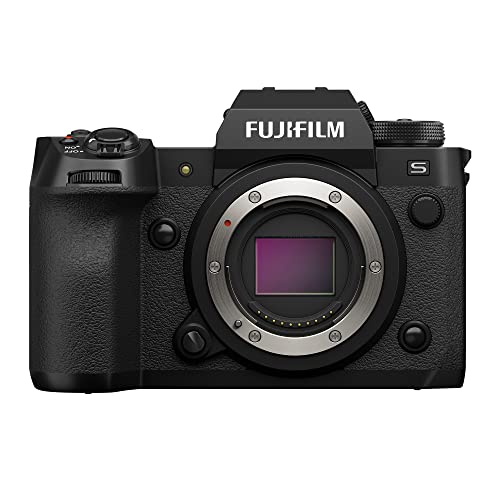
- X-H2S is the first X Series camera to feature the 26.1-megapixel, X-Trans 5 stacked back-illuminated sensor. The unique X-Trans color filter array that minimizes moiré and false colors, placing the sensor’s circuitry on a separate layer from the pixels delivers outstanding image quality thanks to expanded low light capabilities and up to 14-stops of dynamic range. The new X-Processor 5, offers lightning-fast performance for the most demanding situations. Capable of handling vast amounts of data, X-Processor 5 delivers next-level performance enhancements in video and stills processing capabilities and intelligent autofocus functionality that’s 3x faster than Fujifilm’s preceding X-T4 model.
- Powerful video features make X-H2S a go-to device – both for hybrid image makers and dedicated motion professionals. Up to 90 minutes of footage can be internally recorded with a single battery, at a wide range of resolutions and frame rates up to 6.2K/30P in Open Gate 3:2, 4K/120P, and Full HD/240P. This delivers unparalleled flexibility within the X Series lineup. Additionally, the ability to record 10-bit 4:2:2 Apple ProRes footage internally to CFexpress Type B memory cards offers incredible post-production flexibility, while the X-Trans 5 sensor’s 14-stop dynamic range optimizes the level of image detail across a uniquely wide exposure range.
- The autofocusing system in X-H2S is not only quick, but also highly advanced. Capable of working in light levels down to -7EV and keeping up with both fast and erratically moving subjects, it now features Subject Detection autofocus, utilizing AI to deliver an unmatched autofocus performance. Previous X Series models offer Face and Eye Detection AF, X-H2S’s Subject Detection AF broadens the range of identifiable subjects to further enhance focusing accuracy. The new system can identify and track cars, planes, trains, motorcyclists, birds, horses, dogs, cats and more. Furthermore, face and eye detection capabilities have been expanded to pick up hairlines, glasses, and face coverings.
Fujifilm’s flagship APS-C body shoots up to 40fps with a stacked sensor, pro-grade build, and serious video — proof you don’t need full-frame for professional speed. A favorite for wildlife and sports shooters who want reach and portability.
✓ Pros: Blazing 40fps; stacked sensor with minimal rolling shutter; tough, weather-sealed; great video.
✗ Cons: APS-C low-light trails full-frame; smaller buffer than full pro flagships.
5. Nikon Z7 II — best high-resolution value

- Every little detail matters. 45.7MP. Powerful AF performance. NIKKOR Z lenses. Intuitive functionality. The most sophisticated tool for high resolution imaging.
- Subject acquisition with speed and precision. 3.3x more buffer capacity than the original Z 7. Faster continuous shooting. Improved AF performance and functionality.
- Dual card slots (CFexpress/XQD and UHS-II SD). Flexibility and peace of mind when shooting important moments or on assignment, such as wedding and event photography. Comfortable. Durable. Intuitive. Z 7II’s exterior and interior have been thoughtfully designed to be handled and used with max comfort and ease of operation.
For detail-critical landscape, studio, and commercial work, the Z7 II’s 45.7MP full-frame sensor delivers gorgeous resolution and dynamic range at a now-attractive price. A superb foundation that you won’t outgrow. (The newer Z8 adds speed if you need it.)
✓ Pros: 45.7MP detail and dynamic range; excellent build; dual card slots; great value.
✗ Cons: Slower than flagships; AF trails Sony/Canon’s best.
6. Panasonic Lumix S1H — best for video and cinema

- Newly designed full frame sensor – 24 2MP full-frame MOS sensor offers a wide dynamic range and sharp natural expression at high sensitivity settings
- 6K 10-BIT VIDEO – Includes full-area 3 2 6K24p C4K(4 096 x 2 160) and anamorphic modes
- Dual native ISO – offers the advantages of very high sensitivity for low-light shoots while suppressing noise levels allowing the camera to switch from a standard sensitivity to a higher sensitivity with almost no noise degradation
A Netflix-approved cinema camera in a mirrorless body, the S1H offers cine-grade 6K capture, unlimited recording, and outstanding color — the choice for filmmakers and hybrid pros who prioritize video.
✓ Pros: Cinema-grade video and color; unlimited recording; superb build and stabilization.
✗ Cons: Big and heavy; contrast-AF lags rivals for stills.
7. Panasonic Lumix GH6 — best Micro Four Thirds for video
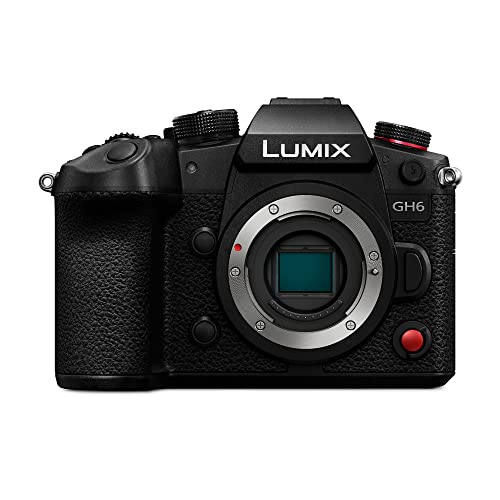
- Higher Resolution and Bit Rates than Ever Before: 25MP Sensor and Venus Engine with 100MP Hand-Held High Resolution Shot; 5.7K 60p, 4K 120p 10-bit video and all recording modes are no time limit
- Incredible Image Quality and Versatility: Internal recording in Apple ProRes 422 HQ and 422 to deliver high image quality at low compression; Pre-installed V-Log/V-Gamut and plus13-stops of dynamic range with Dynamic Range Boost
- Unbelievably Stable, Even in Low Light: Powerful 5-axis Dual I.S. 2 provides up to 7.5-stops of correction; Full-HD High frame rate video at 300fps (12.5x) slow motion
The GH6 packs pro video features — high frame rates, internal ProRes, excellent stabilization — into a compact, affordable Micro Four Thirds body. A run-and-gun creator’s favorite.
✓ Pros: Outstanding video specs for the price; compact and light; great stabilization.
✗ Cons: Smaller sensor limits low-light and depth of field.
8. Fujifilm GFX 50S II — best medium-format value
Medium format used to cost as much as a car; the GFX 50S II brings its 51MP larger-than-full-frame sensor — and that distinctive, gorgeous image quality — to near-full-frame-flagship prices. The pick for studio, landscape, and fine-art photographers.
✓ Pros: Stunning medium-format image quality; in-body stabilization; surprisingly affordable.
✗ Cons: Slower operation; not built for action; pricier lenses.
Frequently asked questions
What is the best professional mirrorless camera in 2026?
The Nikon Z9 (or the smaller Z8) for all-round professional work, the Canon EOS R5 Mark II for hybrid shooting, and the Sony A1 II at the very top. For value, the original R5, Nikon Z7 II, and Sony a7 IV deliver pro results for less.
Do you need full-frame to be professional?
No. Full-frame is the standard for low light and shallow depth of field, but pro APS-C bodies like the X-H2S excel at fast action, and medium format (GFX) beats full-frame for detail. Match the format to your work.
Is mirrorless better than DSLR for professionals?
Yes, in 2026 — mirrorless offers better autofocus, silent shooting, and is where every maker now invests. A pro DSLR can still be a great value, though; see our professional DSLR guide.
Should I buy this year’s flagship or last year’s?
For most professionals, the previous generation (R5, Z7 II, a7 IV) is the smarter buy — you save thousands while keeping world-class image quality, losing only incremental speed and AF versus the latest release.
The bottom line
Professional mirrorless has never been stronger. The Nikon Z9 and Z8 are the do-everything flagships, the Canon EOS R5 the hybrid workhorse, and the Sony a7 IV the value champion that delivers pro results without the flagship price. Buy the body that fits your work, invest the savings in great lenses, and you’ll have a professional kit that performs for years.